The experience
You are not booking an hour. You are booking the wall.
A session is the middle of the process, not the whole of it. Before it there is a planning call and a wardrobe conversation. After it there is a reveal, a design decision, printing, framing, and two people turning up at your house with a drill.
Planning call before the day
Session up to 90 minutes
Reveal in 2–3 weeks
We hang it for you
Why it works this way
Most people who book a photographer never print anything.
Not because they did not care. Because the job ended with a link. The link arrived on a Tuesday, everyone looked through it on a phone, someone said we should get one of these done properly, and then life happened.
We built the whole thing backwards from the finished piece instead. That means we ask about your house before we ask about your camera-shy husband. It means we measure the wall on the planning call. It means you see your images at the size they would actually hang, not at 9cm on a screen, because nobody has ever been able to judge scale from a thumbnail.
It also means the decisions get made while you are still in the room with us, with the images in front of you and someone who does this every week helping you choose. That is not a sales tactic. It is the only part of the process where being guided actually changes what ends up on your wall.
Start to finish
Four steps, and we lead all four.
Every session we run — newborn, maternity, children, family, headshots — follows the same shape. Only the timing and the room change.
01
The planning call
Before the day
A proper conversation, not a booking confirmation. We want to know who is in the photograph and how they behave in front of a camera — the one who performs, the one who freezes, the teenager who has already said she is not doing this.
We talk through what everybody is wearing, garment by garment if that helps. And we ask the question most studios never ask: which wall is this for? Then we get you to measure it, so the piece we design later actually fits the space it is going into rather than being a size chosen off a price list.
- Who is coming, and what each of them is like on camera
- Wardrobe, one outfit at a time, with photos if you want to send them
- Studio in Epping or a location across Sydney
- The room the artwork is destined for, measured
- Timing around naps, school pickup and feeds
02
The session
Up to 90 minutes · Epping studio or on location
Fully directed, start to finish. Nobody has to know what to do with their hands, where to look, or how to stand so they look like themselves. We tell you, and we keep telling you, and after about ten minutes most people stop thinking about it.
We work through several setups so you are not choosing between fifty versions of one pose. Children move, adults get a moment on their own, and the parent who is always behind the camera gets photographed properly — usually for the first time in years.
- Direction and posing for every person, every frame
- Several setups, not one backdrop repeated
- Individual portraits as well as the group
- Breaks whenever the smallest person needs one
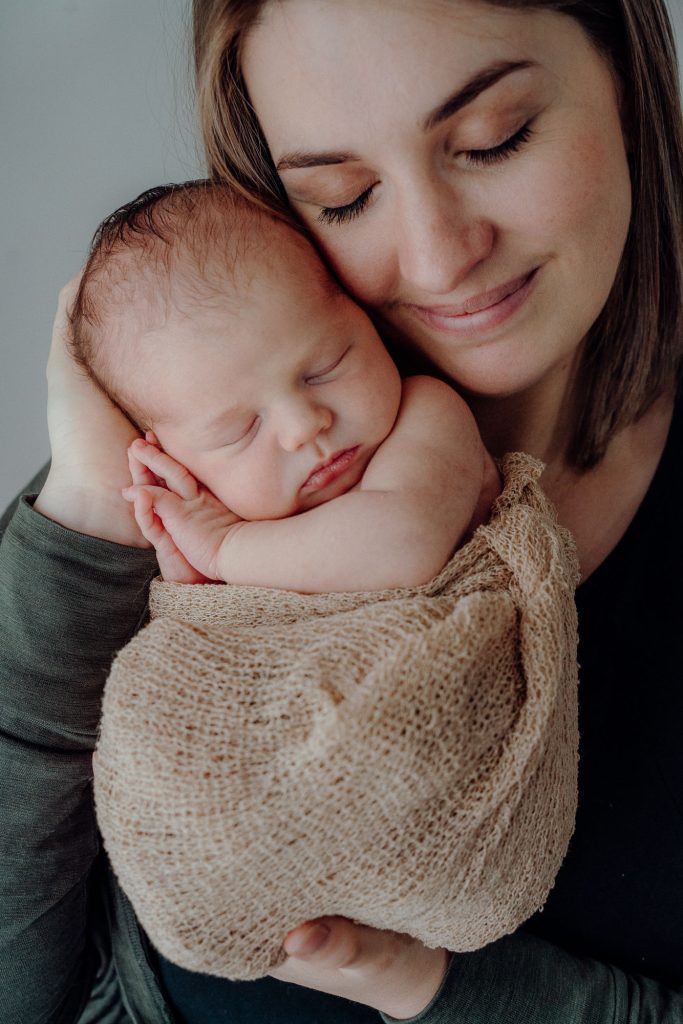
- Newborn sessions run longer — two to three hours, at the baby’s pace
03
The reveal
2–3 weeks later · at the studio
You come back and see the images projected at real size, on a real wall, in the order we think tells the story best. A metre-wide portrait looks like a metre-wide portrait. This is the part people are most surprised by and it is the reason we do not simply email a gallery.
You choose there, together, with us designing the piece in front of you — single portrait or a set, which room, which frame, what size the wall actually wants. Bring your partner. This is a decision two people should make in the same room.
- Every image, projected at the size it would hang
- Wall layouts designed live against your measurements
- Full price list on the table before you choose anything
- Album spreads laid out with you if you want one
- No minimum spend, and nothing printed until you approve it
04
Print, frame and hang
Date set at your reveal
We retouch what you have chosen, order the print, have it framed, check it ourselves before it leaves us, and then bring it to your house and put it on the wall. Straight, at the right height, in the room you measured on the very first call. We’ll give you a firm date at your reveal, once we know what you’ve chosen.
Installation is not an upsell and it is not something we hope you will manage with a picture hook from Bunnings. A large framed piece is heavy, awkward and easy to hang badly. It is the last step of the job, so we do it.
- Retouching on every chosen image
- Printing and framing managed by us end to end
- Quality checked before it reaches you
- We deliver and hang across Sydney. If you’re further out, tell us where and we’ll sort it.

What to wear
The thing you are quietly most worried about.
Almost nobody says it out loud on the enquiry form, but wardrobe is the single biggest source of stress before a session, and it is the one thing that can genuinely limit how good the photographs are. So here is the actual advice, not a mood board.
Tonal families, not matching
Matching outfits date badly and they flatten everyone into a uniform. What you want is a family of tones that sit together: warm neutrals, or soft earth tones, or a cool range of greys, blues and off-whites. Pick one range and let each person wear a different weight of it. The eye reads the group as belonging together without anyone looking like they were issued a shirt.
Texture beats pattern
A cable knit, a linen shirt, a corduroy pinafore, a chunky cardigan — texture gives the light something to do and it photographs beautifully at large sizes. Pattern does the opposite. Stripes, small checks and busy florals fight for attention, and on a wall-sized print they pull the eye away from faces every time. If someone loves a pattern, put it on one person and keep everyone else quiet.
Sleeves, almost always
Bare arms are the brightest thing in most portraits after skin on the face, and in a group they draw the eye straight to whoever is showing the most of them. Long or three-quarter sleeves are more flattering on nearly everybody, they photograph as shape rather than as brightness, and they solve the problem of the person who is self-conscious about their arms before it becomes a problem.
What fails on camera
- Large logos and slogans — they will be the first thing anyone reads for the next twenty years
- Neon and fluoro — they throw colour up onto faces
- Fine stripes and small repeating checks — they can shimmer at print size
- Pure white tops on their own — they blow out and drag attention downward
- Distracting graphics on children’s clothing — the dinosaur will outlive the photograph
- Anything nobody is comfortable in — it shows in the shoulders within a minute
The one who will not play along
There is usually one. A teenager who wants to wear black, a husband who owns four shirts and likes none of them, a six-year-old who will only leave the house in the same dress. Do not spend a fortnight arguing about it.
Work the other way around: let that person wear the thing, then build everyone else’s tones around it. Black is easy to build around. So is a favourite dress. A family that turns up slightly imperfect and relaxed photographs far better than one that arrives coordinated and cross with each other. If it is genuinely unworkable, tell us on the call and we will find the compromise — it is not the first time we have negotiated a wardrobe.
You are not doing this alone
All of it gets covered on the planning call. Send us photos of what you are thinking, laid out on the bed, and we will tell you what works, what to swap and what to leave in the wardrobe. Deciding it a week out rather than the night before is the single easiest thing you can do to improve your own photographs.
Direction
Nobody arrives relaxed. That is our problem, not yours.
If you hate having your photograph taken, you are the normal one. Almost everyone who walks in says a version of the same sentence in the first two minutes.
People arrive braced. Arms crossed, chin doing something strange, apologising in advance for not being photogenic. That is not a personality flaw, it is what happens when someone points a camera at you and then says nothing. Left in silence, everybody defaults to a face they do not recognise.
So we do not leave silence. Being able to photograph people who do not enjoy being photographed is a specific, learnable skill, and it is ours — developed over years of sessions with children who would rather be anywhere else and adults who have not liked a photo of themselves since 2009. You are not expected to bring it with you.
In practice it looks like constant, low-key instruction. Where to put your weight. What to do with the hand you do not know what to do with. Who to look at, and when to stop looking. Something to say to your daughter that will make her laugh for real rather than on cue. Half of it will not feel like posing at all, and the frame we keep is usually the one taken half a second after you thought we had stopped.
There is no requirement to perform, be funny, or produce a natural smile on demand. Turn up and follow instructions. We handle the rest.
Children do not need to behave
Sitting still is not the goal and never has been. We build the session around movement, and the honest truth is that the best frames come out of the mess rather than in spite of it.
Teenagers are fine
They come in expecting it to be excruciating. We give them something to do, keep it short, and photograph them like adults, which is generally all they wanted.
The parent who is never in a photo
Usually the mother. Usually the one who booked the session for everyone else. You are being photographed too, properly and flatteringly, and that is not negotiable.
Binh and Lin, both
Husband and wife, parents of three. Nothing your family does on the day will be new to us, including whatever happens ten minutes in.
On the day
The practical details.
Small things, but they are what people email us about the week before.
Getting here
The studio is in Epping, Sydney NSW, by appointment only, Tuesday to Saturday 9am to 5pm. The full address and parking details come with your booking confirmation.
Arrive early
Ten minutes before your start time is enough. It gives everyone a chance to look around, use the bathroom and stop being in car mode before we begin.
Bring snacks
And water, and a change of clothes for anybody under five. A hungry three-year-old is the only thing that can genuinely shorten a session.
Timing around naps
Tell us the nap window on the planning call and we will book around it. Fighting a toddler’s body clock is a losing game and we would rather not play it.
Kids can be kids
Nobody here is embarrassed by a meltdown, a refusal, or a child who spends the first fifteen minutes hiding behind your legs. We have three of our own. We wait it out.
What to wear
Do what you would do for a nice dinner rather than a wedding. Comfortable, in colours you actually wear, and nothing with a logo on it. We will talk it through on the planning call.


The reveal, honestly
You are wondering whether this is where we sell to you.
Fair question. Plenty of studios run a reveal that is really a pressure appointment. Here is exactly how ours works, so you can decide in advance whether you are comfortable with it.
Yes, this is where artwork is chosen, and yes, we want you to buy something — we make no secret of the fact that the entire experience is built around walking out with a piece on the wall rather than a folder on a laptop. What we will not do is make you sit through an hour of tactics to get there.
Most families invest between $1,800 and $4,500. Some spend the session fee and nothing else, and that is a perfectly acceptable outcome for us. Nobody gets treated differently on the way out.
- No minimum spend. Not a soft one, not a suggested one. None.
- The session fee stands alone. $395 covers the photography and the design consultation whether you order artwork or not.
- You see prices before you choose. The full list is on the table at the start of the reveal, not produced after you have fallen in love with an image.
- Nothing is printed until you approve it. Every crop, every retouch, every layout gets your sign-off first.
- No countdown offers. No pricing that expires at the end of the appointment.
- Bring both decision makers. Not so we can work on you — so you are not driving home to relay a decision you both should have made.
Timeline
From enquiry to hung on the wall.
Sessions currently book four to six weeks ahead. If you have a date in mind — a birthday, a milestone, Christmas — work backwards from this.
| Stage | When | What happens |
|---|---|---|
| Enquiry | Reply within one business day | We check availability and answer whatever you asked. |
| Booking | 4–6 weeks ahead | Date held. Newborns reserve by due-date month, enquire at 28–34 weeks. |
| Planning call | Before the session | Wardrobe, people, location, and the wall gets measured. |
| The session | Up to 90 minutes | Fully directed. Newborn sessions run two to three hours. |
| The reveal | 2–3 weeks later | Images at real size. Artwork designed and chosen with you. |
| Production | Confirmed at your reveal | Retouching, printing, framing, quality check. |
| Installation | By arrangement | We deliver it and hang it. |
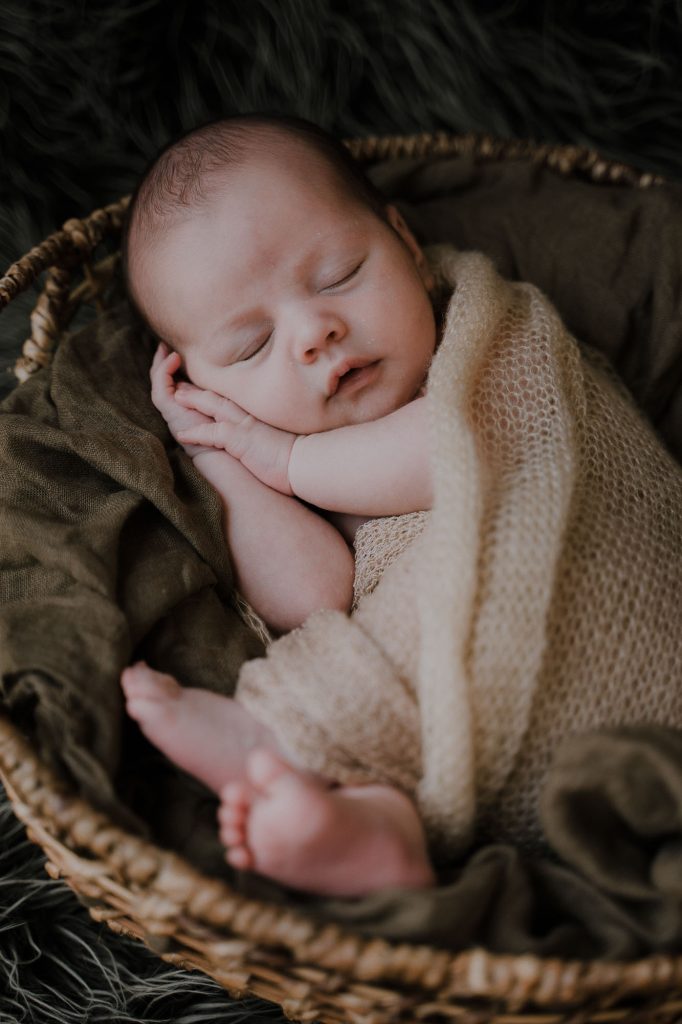
Newborn timing is the one to plan early — babies are photographed at 5 to 14 days old, so the diary is held by due-date month rather than by date.
Before you book
Questions we get every week.
Up to 90 minutes, in the Epping studio or on location across Sydney — Northern Beaches, Inner West, Sutherland Shire, the Hills, Ryde, Hornsby, Eastwood and the North Shore.
Newborn sessions are the exception and often run two to three hours. A newborn cannot be hurried, so we do not try. See newborn sessions for how that day is structured.
Then start with one tonal family, favour texture over pattern, and put everyone in sleeves. That gets you eighty per cent of the way there before we have even spoken.
The rest we do together on the planning call. Send photos of the options laid out and we will tell you what to keep and what to swap.
No, and it is not the goal either. We build sessions around movement, and the pictures parents end up hanging are rarely the ones where everyone sat neatly. Meltdowns, refusals and hiding behind legs are all normal. We wait them out.
Because nobody can judge a metre-wide print from a phone screen. At the reveal your images are projected at the size they would hang, against a real wall, so the decision is made with the information you actually need.
It is also where the piece gets designed — layout, size, framing — with us doing it in front of you rather than you guessing from a price list. See what we make.
That is fine. There is no minimum spend and the $395 session fee stands alone. You will see the full price list before you choose anything, and nothing gets printed without your approval.
Four to six weeks for most sessions. For newborns, enquire at around 28 to 34 weeks — we hold the diary by due-date month and photograph at 5 to 14 days old.
If you want a shorter, lower-commitment introduction first, Mini Love runs 15 minutes for $150.
Enquire
Start with the call. Everything else follows.
Tell us who you would like photographed and roughly when. We reply within one business day with availability, and the planning call happens well before the day itself.